
Why Do Mothers Feel Like They Are Failing? Where Did These Expectations Come From?

A blog series on the social construction of motherhood, the ideology that shapes it, and what it costs us.
I want to start with something I say to clients: the way you are experiencing motherhood right now did not come out of nowhere. It has a history. A long, complicated, often deliberately constructed history. And once you understand where the expectations you are holding yourself to actually came from, it becomes a lot harder to treat them as personal failure.
This is the first post in a four-part series on the sociology of motherhood. I am writing it as a therapist who works with mothers, perinatal women, and families navigating some of the hardest seasons of life. I am also writing it as a mother myself, who has sat with the same impossible standard and had to learn, slowly, how to stop measuring myself against it.
Let's start at the beginning with a very brief history.
Before the Industrial Revolution: The Village Was Real
For most of human history, mothering was never one person's job. Anthropologists describe what is called alloparenting: the practice of distributing child-rearing responsibilities across a network of adults, not just the biological mother. Grandmothers, aunts, older siblings, community members. Babies were held, fed, and cared for by many people. Mothers worked alongside the group.
The idea that a mother should be the sole primary caregiver, alone with her children, responsible for every aspect of their physical and emotional development, is not ancient wisdom. It is a recent structural invention.

The Industrial Revolution: When Motherhood Became an Identity
When industrialization pulled men into factories in the 1800s, something fundamental shifted. Women were pushed into the domestic sphere, and motherhood became a full-time identity for the first time. The "angel of the house" ideal emerged: a mother who was morally pure, endlessly self-sacrificing, and home bound. Her entire purpose was the home and the children within it.
The village disappeared.

The 1950s: A Myth That Set the Standard
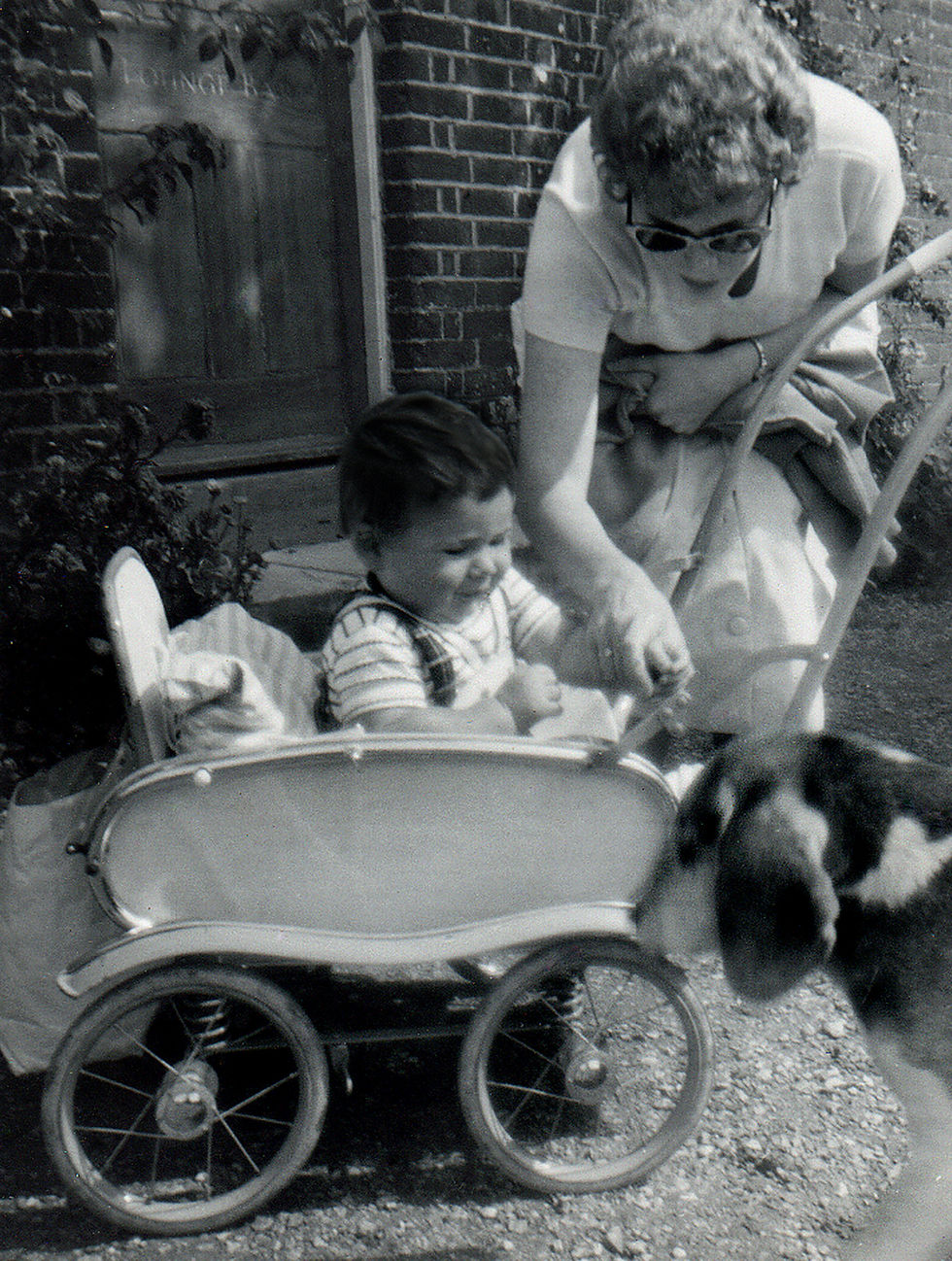
After World War Two, women who had filled industrial jobs during the war were sent back home. What followed was one of the most aggressive cultural campaigns in modern history around what a good mother looked like. Television, advertising, government policy, and a booming consumer economy built around the suburban home created the image of the devoted, cheerful, immaculate housewife.
Researchers have since made clear that this image was largely a myth. The real picture included women who worked, who struggled, who self-medicated and who lived lives far more complex than the television version allowed. Women of colour were erased from this narrative almost entirely, including those employed in white middle-class households to sustain the very myth that excluded them.
But the image lodged itself deep. It became the benchmark for what a good mother was supposed to look like, and we are still untangling it today.
The Science That Made It Worse
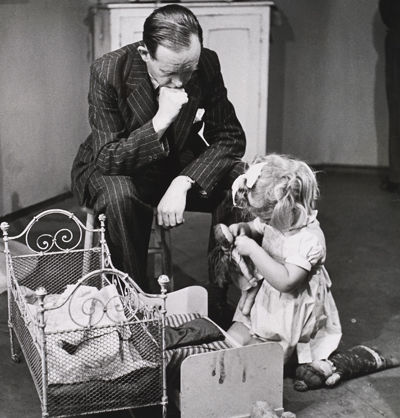
Postwar psychology lent authority to the domestic ideal in ways that had lasting consequences. In a WHO-commissioned report, psychologist John Bowlby listed "working mother" as a risk factor for children alongside famine and poverty.
Early attachment research was designed almost entirely around isolated mother-child pairs, mirroring the suburban housewife model, and then used to argue that this was the natural and necessary condition for healthy child development.
The science was shaped to fit the ideology, not the other way around. Mothers who worked, who needed help, who weren't constantly available, were positioned as a risk. The guilt for doing anything outside of complete devotion was built right into the research framework.
It created an unrealistic and unattainable expectation for mothers under the guise of research and this is one of the reasons we feel like we keep failing.
Where We Are Now
Layer on top of all of this: a cost of living crisis, a healthcare system that sends you hom
e days after birth and checks in at six weeks, a social media landscape that serves you someone else's highlight reel before you've had your first coffee, and the complete dissolution of the village that was supposed to share this load.
The expectations increased and the support system didn't.

In part two of this series, I'll go deeper into what sociologist Sharon Hays named in 1996 as "intensive mothering" and why the standard has only gotten more demanding since.
Sources for this post:
Hays, S. (1996). The Cultural Contradictions of Motherhood. Yale University Press.
Bowlby, J. (1951). Maternal Care and Mental Health. World Health Organization.
Minnotte, K.L. (2023). Decentering intensive mothering. Sociology Compass.
Reddy, M. (2025). What's the secret to motherhood? How 20th century scientists got it wrong. Yahoo News.


Comments